
Data Center Construction: A Simple Guide to Phases, Cost, Timeline, and Key Roles
Data center construction is more than a building project. It is the process of designing, building, testing, and turning over a mission-critical facility that can support servers, networking equipment, power systems, cooling infrastructure, security systems, and long-term operations.
The demand behind these projects keeps growing. The U.S. Department of Energy reports that data centers consumed about 4.4% of total U.S. electricity in 2023 and are expected to consume approximately 6.7% to 12% by 2028. That growth is being driven by data center expansion, artificial intelligence, manufacturing growth, and broader electrification, which is one reason power availability has become such a major part of data center construction planning.
These pressures are affecting every part of the data center construction process. Developers need the right site, enough power, reliable cooling, long-lead equipment, experienced contractors, and qualified technical talent. If one part falls behind, the full schedule can be at risk.
This guide breaks down the main data center construction phases, typical costs, project timelines, and the key roles involved from site prep to commissioning and turnover.
What Is Data Center Construction?
Data center construction is the process of building a facility designed to house and protect IT infrastructure. These facilities support servers, storage systems, networking equipment, cloud platforms, AI workloads, and enterprise applications.
Unlike a standard commercial building, a data center must be built around uptime, redundancy, power density, cooling, security, and constant availability. The building itself matters, but the systems inside it matter even more.
A data center construction project usually moves from site selection and design through permitting, site work, MEP installation, network infrastructure, commissioning, and turnover. Each phase depends on careful coordination between owners, developers, engineers, contractors, equipment vendors, commissioning teams, and operations staff.
Why Data Center Construction Is Different from Standard Building Construction
Data centers are built to support nonstop digital infrastructure. That makes the design and construction process more technical, more capital-intensive, and more dependent on specialized talent.
Power and Cooling Drive the Project
In many commercial buildings, power and HVAC systems support normal occupancy. In a data center, power and cooling are the heart of the facility.
A data center must support high electrical loads, backup power, redundant distribution, battery systems, generators, chillers, airflow management, and sometimes liquid cooling. These systems must work together under normal conditions and during failure events, which is why engineers, MEP contractors, commissioning agents, and facilities leaders need to be involved early.
Uptime Requirements Leave Less Room for Error
Data center customers expect reliability. Even a short outage can create operational, financial, and reputational damage.
That is why redundancy is built into the project from the beginning. Depending on the facility, that may include N+1, 2N, or other redundancy models across power, cooling, network, and backup systems.
Construction quality also matters because small installation issues can become major operational problems later. A loose connection, missed test, poor documentation, or incomplete handoff can create risk after the facility is live.
Long-Lead Equipment Can Shape the Timeline
Data center construction schedules are often shaped by equipment availability. Transformers, switchgear, UPS systems, generators, cooling systems, and control equipment can take months to procure.
If procurement starts too late, construction may move forward while critical systems are still missing. That can delay energization, commissioning, and turnover.
Strong planning means aligning design, procurement, construction, staffing, and commissioning before the project reaches a bottleneck.
The Main Phases of Data Center Construction
Every project is different, but most data center construction projects follow a similar path.
| Phase | What Happens | Key Teams Involved |
| Site selection and feasibility | Location, power, fiber, zoning, utilities, environmental review | Owner, developer, site consultants, utility partners |
| Design and engineering | Facility layout, power design, cooling strategy, redundancy, MEP planning | Architects, electrical engineers, mechanical engineers, design teams |
| Permitting and utility coordination | Local approvals, utility service, interconnection, environmental requirements | Owner, permitting teams, utilities, local authorities |
| Site preparation and civil work | Grading, drainage, roads, underground utilities, foundations | Civil contractors, site crews, project managers |
| Building shell construction | Structure, envelope, roof, security hardening, physical layout | General contractor, structural teams, trades |
| MEP installation | Electrical distribution, cooling systems, plumbing, fire protection, controls | MEP contractors, engineers, vendors |
| Network and security infrastructure | Fiber, cabling, access control, surveillance, white space readiness | IT teams, network vendors, security contractors |
| Commissioning and turnover | Testing, validation, documentation, training, operations handoff | Commissioning agents, engineers, facilities teams |
Site Selection and Feasibility
The site selection phase answers one major question: can this location support the facility’s long-term requirements?
Teams evaluate land availability, access to power, fiber connectivity, zoning, water availability, environmental constraints, community impact, and future expansion potential.
Design and Engineering
Once the site is selected, the design and engineering phase translates business goals into technical plans.
This includes the building layout, white space planning, electrical architecture, cooling design, fire protection, security systems, redundancy strategy, and equipment specifications.
This is also the stage where teams need to make decisions around density. AI-ready data centers, for example, may require higher power density, more advanced cooling, and different operational planning than a lower-density enterprise facility.
Permitting and Utility Coordination
Permitting can involve local zoning, building approvals, environmental reviews, utility coordination, traffic plans, stormwater management, and community input.
Utility coordination is especially important. Even if a site is approved for construction, the facility cannot operate without enough power. Substation upgrades, transmission work, or new utility infrastructure can add time and complexity.
Site Preparation and Civil Work
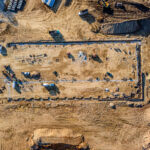
After approvals are in place, the project moves into site preparation, which can include clearing, grading, excavation, drainage, underground utilities, foundations, and access roads. Poor site preparation can cause schedule problems later, especially if drainage, utility routing, or access issues are not handled correctly.
Building Shell and Structural Construction
The building shell includes the structure, roof, walls, envelope, loading areas, support spaces, and physical security features. Unlike many traditional buildings, data centers often need secure access points, hardened spaces, controlled equipment pathways, and layouts that support long-term maintenance.
MEP Installation and System Integration
MEP installation is one of the most important phases in data center construction. MEP stands for mechanical, electrical, and plumbing, but in a data center, this work is closely tied to uptime.
Electrical systems may include transformers, switchgear, UPS systems, generators, PDUs, busways, grounding, and monitoring equipment. Mechanical systems may include chillers, pumps, cooling towers, CRAH units, CRAC units, airflow systems, or liquid cooling infrastructure.
This is where coordination becomes critical. Electrical, mechanical, controls, fire protection, and building automation systems all need to work together.
Network, Security, and IT Infrastructure
As the facility moves closer to completion, teams begin installing network and security infrastructure. This can include fiber pathways, structured cabling, meet-me rooms, surveillance, access control, monitoring systems, and white space preparation.
Commissioning, Testing, and Turnover
Commissioning is the process of testing and verifying that the facility performs as designed before it goes live.
This is not just a final walkthrough. Commissioning may include factory acceptance testing, site acceptance testing, equipment startup, functional performance testing, integrated systems testing, failure scenario testing, documentation review, and operator training.
This is also the point where the project shifts from construction to operations. A strong turnover includes accurate documentation, trained facilities staff, clear maintenance procedures, and a team ready to manage the site after handoff.
An electrical commissioning engineer is especially important during this stage because these specialists help test power, controls, and supporting systems before handoff.
Typical Data Center Construction Timeline by Phase
A typical data center construction timeline can range from 18 to 30 months for many projects, while the full development lifecycle can take longer when planning, permitting, utility coordination, and large-scale campus development are included. Broadstaff’s guide to the data center construction timeline breaks down these phases in more detail.
| Phase | Typical Duration | Notes |
| Site selection and feasibility | 3 to 6 months | Can take longer if power or land options are limited |
| Design and engineering | 6 to 12 months | Often overlaps with permitting and procurement |
| Permitting and utility coordination | 6 to 18 months | Utility work can become one of the longest schedule drivers |
| Site preparation and civil work | 2 to 6 months | Depends on land condition and site complexity |
| Building shell construction | 6 to 12 months | May overlap with early MEP work |
| MEP installation | 6 to 12 months | Depends on equipment availability and trade coordination |
| Commissioning and turnover | 3 to 6 months | Should be planned early, not added at the end |
Large hyperscale campuses, AI-ready facilities, or projects with major utility upgrades can take longer. The schedule is also affected by long-lead equipment, permitting conditions, labor availability, design changes, and commissioning readiness.
How Much Does Data Center Construction Cost?
Data center construction cost depends on size, location, density, redundancy, power requirements, cooling strategy, land cost, labor availability, and equipment lead times. Because so many systems support uptime, cost planning should account for more than the building footprint alone.
Cost per Megawatt
Many data center construction cost estimates use cost per megawatt because power capacity is one of the most important planning factors. A common planning range is roughly $7 million to $12 million per megawatt, although costs can move higher depending on redundancy, location, utility work, cooling requirements, and equipment availability. Strong data center design and construction planning helps teams account for those cost drivers before the project reaches procurement or commissioning.
Cost per Square Foot
Cost per square foot is also useful, but it can be misleading if used by itself. A smaller AI-ready facility with high power density may cost more than a larger, lower-density facility because the most expensive systems often support power, cooling, redundancy, and uptime.
Major Cost Drivers
| Cost Driver | Why It Matters |
| Electrical systems | Includes utility service, transformers, switchgear, UPS systems, generators, PDUs, and redundancy |
| Mechanical and cooling systems | Includes chillers, CRAH/CRAC units, airflow management, pumps, and liquid cooling where needed |
| Building shell | Includes structure, envelope, roofing, physical security, loading, and support areas |
| Land and site work | Includes land acquisition, grading, drainage, utilities, roads, and environmental work |
| Fire protection and life safety | Includes suppression systems, detection, alarms, and code compliance |
| Network and security infrastructure | Includes fiber, cabling, access control, surveillance, and monitoring systems |
| Labor and specialized trades | Includes general construction, MEP trades, commissioning teams, and technical specialists |
| Commissioning and turnover | Includes testing, validation, documentation, training, and operational readiness |
The biggest mistake is treating cost as a simple square-foot calculation. The better question is what level of power, redundancy, cooling, and operational reliability the facility needs to support.
Who Does What in a Data Center Construction Project?
Data center construction requires many teams working in sequence and often at the same time. Each group has a different role, but schedule problems can happen when responsibilities are unclear.
| Role | Main Responsibility | When They Matter Most |
| Owner or developer | Defines business case, budget, schedule, and performance requirements | Full lifecycle |
| Operator | Provides long-term operational requirements and reliability expectations | Planning through turnover |
| Architect | Designs the building layout, code compliance, and facility flow | Design and permitting |
| Electrical engineer | Designs power architecture, redundancy, load planning, and electrical systems | Design through commissioning |
| Mechanical engineer | Designs cooling, airflow, thermal management, and mechanical systems | Design through operations |
| General contractor or EPC | Manages construction execution, trades, schedule, and site coordination | Construction phase |
| MEP contractors | Install electrical, mechanical, plumbing, fire, and controls systems | Construction and integration |
| Equipment vendors | Provide critical systems such as switchgear, UPS, generators, and cooling equipment | Procurement through startup |
| Commissioning agent | Tests and validates system performance before operations | Testing and turnover |
| Project manager | Tracks schedule, budget, vendors, risk, and communication | Full lifecycle |
| Critical facilities team | Takes over site operations after turnover | Commissioning through operations |
| Staffing and recruiting partner | Helps source specialized project, engineering, commissioning, and operations talent | Before gaps delay the schedule |
This is where workforce planning becomes part of construction planning. The project needs more than equipment and contractors. It needs experienced people who understand mission-critical environments.
Looking at the top data center construction companies can also help clarify which firms are involved in these projects and what roles they commonly hire.
Common Data Center Construction Delays and Risks
Even well-funded data center projects can face delays. The most common risks are usually tied to power, permitting, equipment, labor, and commissioning.
Power Availability
Power availability is one of the biggest constraints in modern data center development. When utility upgrades, interconnection studies, or substation work take longer than expected, the construction timeline can shift.
Permitting and Local Approvals
Data centers can raise local concerns around power use, water use, noise, land use, and infrastructure impact. A delay in permitting can slow design, procurement, site work, and construction mobilization.
Long-Lead Equipment
Transformers, switchgear, generators, UPS systems, chillers, and controls equipment can create schedule pressure if they are ordered too late. Procurement should be part of the construction strategy from the beginning.
Labor and Talent Shortages
Data center construction depends on specialized labor. A project can have the right design and equipment but still fall behind if experienced MEP leaders, engineers, commissioning managers, project managers, controls specialists, and critical facilities talent are not in place at the right time.
Commissioning and Turnover Gaps
Commissioning problems often show up late, but the root cause starts earlier. The best projects plan documentation, coordination, testing requirements, and commissioning support from the design stage instead of treating them as final steps.
Data Center Staffing Needs from Construction to Turnover
Data center staffing should not begin after construction is almost done. The most effective teams think about workforce needs across the full project lifecycle.
Across planning, design, construction, commissioning, and turnover, companies may need project managers, owner’s representatives, engineers, MEP leaders, safety professionals, commissioning specialists, controls specialists, critical facilities technicians, and operations leaders.
That is why workforce planning should be part of the construction plan, not a last-minute reaction. Workforce gaps can affect schedule, commissioning, uptime, and customer commitments.
Simple Data Center Construction Checklist
Use this checklist as a simple planning tool before and during a data center construction project.
- Confirm site power availability and utility timelines
- Validate fiber access and network connectivity
- Review zoning, permitting, and environmental requirements
- Define facility type, density, redundancy, and uptime expectations
- Identify long-lead equipment early
- Build procurement timelines into the master schedule
- Plan MEP coordination before installation begins
- Define commissioning requirements during design
- Create a staffing plan for each construction phase
- Prepare operations staff, documentation, and training before turnover
A data center project is easier to manage when the construction plan, equipment plan, commissioning plan, and staffing plan are connected.
Building the Right Team for a Successful Data Center Project
Data center construction is a high-stakes process because every phase affects the next one, from site selection and design to procurement, staffing, commissioning, and turnover.
The strongest projects are built around coordination. That means the right engineers, contractors, project managers, commissioning specialists, vendors, and operations professionals need to be aligned before the schedule is under pressure.
Broadstaff helps companies find the specialized talent needed to support data center construction, commissioning, and operations. The right staffing strategy can help protect the timeline, reduce hiring delays, and support long-term uptime.
Contact Broadstaff to build the team your next data center project needs.
FAQs About Data Center Construction
What is data center construction?
Data center construction is the process of building a mission-critical facility that supports servers, networking equipment, power systems, cooling infrastructure, security, and operations.
What are the main phases of data center construction?
The main phases include site selection, design and engineering, permitting, site preparation, building shell construction, MEP installation, network and security infrastructure, commissioning, and turnover.
How long does data center construction take?
Many data center construction projects take 18 to 30 months, but the full development timeline can take longer when site selection, permitting, utility coordination, and major power upgrades are included.
How much does data center construction cost?
Costs vary widely based on size, location, power density, redundancy, cooling systems, labor, and equipment. Many early estimates use cost per megawatt and cost per square foot as planning benchmarks.
What is MEP in data center construction?
MEP stands for mechanical, electrical, and plumbing. In data center construction, MEP systems are especially important because they support power, cooling, fire protection, controls, and uptime.
Who is involved in a data center construction project?
Typical teams include owners, developers, operators, architects, engineers, general contractors, EPCs, MEP contractors, equipment vendors, commissioning agents, project managers, and facilities teams.
What causes data center construction delays?
Common delays include power availability, utility coordination, permitting, long-lead equipment, labor shortages, design changes, commissioning issues, and incomplete turnover planning.
What is data center commissioning?
Data center commissioning is the process of testing and validating that the facility’s power, cooling, fire protection, controls, and supporting systems perform as designed before operations begin.
When should staffing begin for a data center construction project?
Staffing should begin early in the project lifecycle, especially for project managers, engineers, MEP leaders, commissioning specialists, and operations teams. Waiting until turnover can create avoidable schedule risk.
What roles are hardest to fill during data center construction?
Hard-to-fill roles often include electrical engineers, MEP project managers, commissioning engineers, controls specialists, critical facilities technicians, and experienced data center construction leaders.
 Previous Post
 Next Post