
Top Data Center Construction Companies: Who’s Building Data Centers and What Roles They Hire
The rapid growth of cloud computing, artificial intelligence, and digital services has triggered a massive global boom in data center construction. Hyperscale providers are building large facilities to support everything from streaming platforms to generative AI workloads.
Behind these facilities are specialized contractors responsible for designing, building, and delivering mission-critical infrastructure. These firms are known as the top data center construction companies, and they play a central role in powering today’s digital economy.
This guide breaks down who the top data center construction companies are, how they fit into the construction timeline, what responsibilities they handle, and what to look for when evaluating or hiring the right partner.
What Are Data Center Construction Companies?
Data center construction companies are specialized contractors that design and build facilities that support critical IT infrastructure.
Unlike traditional construction firms, these companies focus on mission-critical environments, where downtime is not acceptable. Their work involves coordinating power, cooling, and redundancy systems to ensure continuous operation.
Data center construction companies operate within a broader ecosystem of organizations that bring these facilities to life. Hyperscale operators such as AWS, Google, Microsoft, and Meta typically fund and operate the infrastructure. Engineering and design firms handle system planning and technical architecture, while general contractors and construction managers execute the build.
Within this ecosystem, data center construction companies play a central role. They are responsible for turning designs into fully operational facilities by coordinating teams, installing complex systems, and ensuring that every component works together reliably.
Because of the complexity involved, these companies must understand both construction and infrastructure systems. Their ability to manage power, cooling, and redundancy at scale is what separates them from general contractors.
How Data Center Construction Works
Data center construction follows a structured process designed to reduce risk and maintain reliability. Data center construction companies are involved across multiple stages of a project, but their role is most critical during execution.
Typical project phases include:
1. Site Selection
Before construction begins, developers evaluate locations based on power availability, network connectivity, climate conditions, and land costs.
Many hyperscale data centers are built near major fiber routes and power substations.
2. Design & Engineering
Engineering teams develop the facility’s technical infrastructure. Construction teams collaborate with engineers to review designs, plan logistics, estimate costs, and identify risks.
This phase is critical because design decisions impact both cost and operational reliability. Early involvement helps prevent delays later in the project.
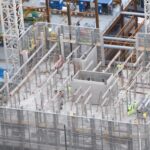
3. Structural Construction
The contractor builds the physical facility, including foundations, structural steel, roofing, and secure access systems. This stage creates the framework that supports all electrical and mechanical infrastructure. Once the structure is complete, teams begin installing critical systems inside the facility.
4. MEP Infrastructure Installation
Mechanical, electrical, and plumbing systems are installed during this phase. This includes generators, cooling infrastructure, UPS systems, and electrical distribution. Because these systems must work together seamlessly, this is often the most complex phase of the project.
5. Commissioning & Testing
The final stage involves testing every system before the data center becomes operational.
Construction companies work alongside commissioning teams to validate system performance, troubleshoot issues, and ensure readiness for operation as part of the broader engineering commissioning process.
Their coordination during this stage directly impacts project success.
Top Data Center Construction Companies
These companies are responsible for building some of the largest and most complex digital infrastructure projects in the world. Several firms consistently lead the industry in building hyperscale and enterprise data centers.
Turner Construction
Turner Construction is one of the largest construction management firms in the world. They have extensive experience in large hyperscale campus builds and global project delivery.
The company has built facilities for many of the largest cloud providers and enterprise operators.
Holder Construction
Holder Construction has built a reputation as one of the most experienced contractors for hyperscale facilities. The firm focuses heavily on data center and technology infrastructure projects, including large campuses for major cloud providers.
Projects typically involve multi-building campuses, redundant electrical infrastructure, and complex cooling systems.
DPR Construction
DPR Construction is widely known for its specialization in highly technical facilities, including advanced data centers. The firm focuses heavily on collaboration with engineering teams to ensure systems meet high uptime requirements.
Major areas of expertise include hyperscale cloud infrastructure, colocation data centers, and enterprise facilities.
Clayco
Clayco provides integrated services including architecture, engineering, and construction management. This vertical integration allows Clayco to deliver design-build data center projects efficiently.
The firm is involved in multiple large hyperscale and colocation developments across North America.
HITT Contracting
HITT Contracting has expanded significantly into large-scale infrastructure construction, particularly in hyperscale data center builds. Their teams specialize in delivering projects with tight timelines while maintaining reliability standards.
The Whiting-Turner Contracting Company
Whiting-Turner is another major contractor with strong experience in large infrastructure projects. The firm delivers hyperscale campuses, enterprise data centers, and colocation facilities.
Their projects often involve multi-megawatt electrical systems and large cooling plants, which require specialized engineering and commissioning expertise.
Fortis Construction
Fortis Construction focuses heavily on technology infrastructure, making it a key contractor in the data center sector.
The company frequently works with hyperscale cloud providers, colocation operators, and technology firms.
Key Responsibilities of Data Center Construction Companies
Data center construction companies manage highly complex projects where reliability, coordination, and precision are critical. Their responsibilities go beyond traditional construction and require a deep understanding of infrastructure systems.
Key responsibilities include:
- managing overall construction timelines and budgets
- coordinating multiple contractors and trades
- installing electrical and mechanical infrastructure
- ensuring compliance with safety and building standards
- integrating power, cooling, and redundancy systems
- supporting testing and commissioning processes
- maintaining quality control across all phases of construction
Common Mistakes When Evaluating Data Center Construction Companies
Choosing the wrong contractor can lead to major delays, cost overruns, and reliability issues.
Many construction firms have general experience, but not all are equipped to handle mission-critical environments. Even small gaps in experience or coordination can lead to major issues later in the project.
Watch for these red flags:
- lack of mission-critical or data center experience
- limited understanding of redundancy and uptime requirements
- poor coordination between engineering and construction teams
- history of project delays or budget overruns
- weak commissioning support or testing processes
- inability to scale for large hyperscale projects
These issues often result in costly rework and operational risks after project completion.
Hiring Checklist for Data Center Construction Companies
Selecting the right contractor requires more than reviewing past projects. Companies should evaluate both technical expertise and the ability to deliver under tight timelines and complex conditions.
When evaluating contractors, look for firms that meet the following criteria:
- proven experience with data center or mission-critical builds
- ability to manage large, complex infrastructure projects
- strong expertise in electrical and mechanical systems
- experience working with hyperscale or enterprise clients
- established safety and compliance processes
- ability to support commissioning and system validation
- strong project management and coordination capabilities
The right contractor should not only build the facility, but also ensure it performs reliably under real-world conditions.
5 Interview Questions to Ask Data Center Construction Companies
When selecting a construction partner, asking the right questions can help identify the most qualified firm.
- What experience do you have with hyperscale or mission-critical data center projects?
- How do you manage coordination between engineering, construction, and commissioning teams?
- What are the most common risks in data center construction, and how do you mitigate them?
- How do you ensure electrical and mechanical systems meet redundancy requirements?
- What processes do you use to support commissioning and final system validation?
These questions help evaluate both technical capability and project execution strength.
What Roles Do Data Center Construction Companies Hire?
Large-scale infrastructure and data center projects require multidisciplinary teams working across engineering, construction, and commissioning. The most in-demand roles typically fall into three categories.
Engineering Roles
Engineering teams design and validate the infrastructure that powers the facility.
- Data center electrical engineers design power distribution systems that ensure continuous uptime.
- MEP design engineers for data centers coordinate mechanical, electrical, and plumbing systems that support cooling and performance.
- Structural engineers ensure the building can support heavy server racks, cooling equipment, and critical infrastructure.
Construction Roles
Construction professionals oversee the build process and coordinate large project teams.
- Project managers are responsible for schedules, budgets, contractor coordination, and overall project execution.
- Superintendents manage field operations and ensure construction aligns with design specifications.
- Project engineers support execution by managing documentation, scheduling, and coordination with engineering teams.
Commissioning Roles
Commissioning is one of the most critical stages of a data center build, ensuring systems function properly before the facility goes live.
- Commissioning engineers test systems such as generators, UPS units, cooling infrastructure, and fire suppression systems.
- Testing specialists assist in validating system performance and identifying issues during final system checks.
These roles work together to ensure the facility is built, tested, and delivered to meet strict reliability standards.
How to Get Hired in Data Center Construction
The data center industry is growing rapidly, and demand for experienced professionals continues to increase. However, breaking into this space requires more than general construction or engineering experience.
Companies are specifically looking for candidates who understand high-reliability infrastructure environments.
Gain Mission-Critical Experience
One of the most effective ways to enter the data center industry is by gaining experience in other types of infrastructure projects. Facilities such as hospitals, energy plants, and telecommunications sites operate under similar reliability requirements and provide valuable exposure to complex systems. This type of experience helps candidates transition more easily into data center construction roles.
Develop Technical Specialization
Employers prioritize candidates with specialized knowledge in areas such as electrical power systems, cooling infrastructure, and commissioning. Because data centers rely on highly integrated systems, having expertise in one of these areas can make candidates significantly more competitive in the hiring process.
Certifications and Training
Certifications can help demonstrate technical expertise and commitment to the field. Credentials such as a Professional Engineer (PE) license, PMP certification for project managers, or commissioning-related certifications are especially valuable. These qualifications often help candidates stand out when competing for roles on large infrastructure projects.
Work With Specialized Recruiters
Because data center construction is highly specialized, many companies rely on recruiters who understand the industry. Working with a staffing partner that focuses on mission-critical infrastructure can provide access to opportunities that are not always publicly listed.
These recruiters can also help match candidates with roles that align with their experience and long-term career goals.
Why Data Center Construction Is Growing So Fast
Several major trends are driving demand for data center construction.
Cloud Computing Expansion
Enterprise and consumer demand for cloud services continues to grow, supported by broader U.S. data center infrastructure trends and increasing energy demands.
AI Infrastructure Development
Artificial intelligence workloads require massive computing power, driving the development of next-generation AI data centers with higher energy density and advanced cooling technologies.
Hyperscale Campus Growth
Instead of single buildings, companies are now developing large multi-building campuses that can support hundreds of megawatts of computing capacity.
Modular Construction
Many firms are adopting modular construction methods to speed up deployment and reduce costs. Prefabricated infrastructure modules allow companies to build data centers faster while maintaining quality standards.
How Broadstaff Helps Data Center Construction Companies Hire Faster
Recruiting for data center projects can be challenging due to the highly specialized skills required.
Broadstaff helps contractors and infrastructure developers through specialized data center staffing and recruiting solutions to quickly find experienced professionals for mission-critical projects.
Our team specializes in staffing roles such as:
- data center electrical engineers
- MEP engineers
- construction project managers
- commissioning engineers
- infrastructure project specialists
With access to a deep network of pre-qualified infrastructure professionals, Broadstaff helps companies reduce hiring timelines, avoid project delays, and ensure the right expertise is in place at every stage of construction.
Need help staffing your next data center project?
Broadstaff can connect you with experienced mission-critical talent fast.
FAQs
Who builds hyperscale data centers?
Hyperscale data centers are typically built by specialized construction firms such as Turner Construction, Holder Construction, DPR Construction, Clayco, and Fortis Construction.
What companies construct data centers?
Large contractors, engineering firms, and mission-critical construction companies build data centers. These companies manage design coordination, infrastructure installation, and commissioning.
What engineers work on data center construction?
Common engineering roles include electrical engineers, MEP engineers, structural engineers, and commissioning engineers.
How long does it take to build a data center?
Construction timelines vary, but most large data centers take 12 to 24 months from groundbreaking to commissioning.
How much does it cost to build a data center?
Costs vary widely depending on size and infrastructure. Hyperscale facilities can cost hundreds of millions or even billions of dollars.
Are data center construction jobs in demand?
Yes. The rapid expansion of cloud computing and artificial intelligence is creating strong demand for engineers, construction managers, and commissioning specialists.
 Previous Post
 Next Post